Why does my roof leak water during heavy Florida rain?
Heavy Florida rain doesn't create roof leaks - it exposes them. Here's why your roof leaks during storms and how to stop the water before it ruins your ceiling.
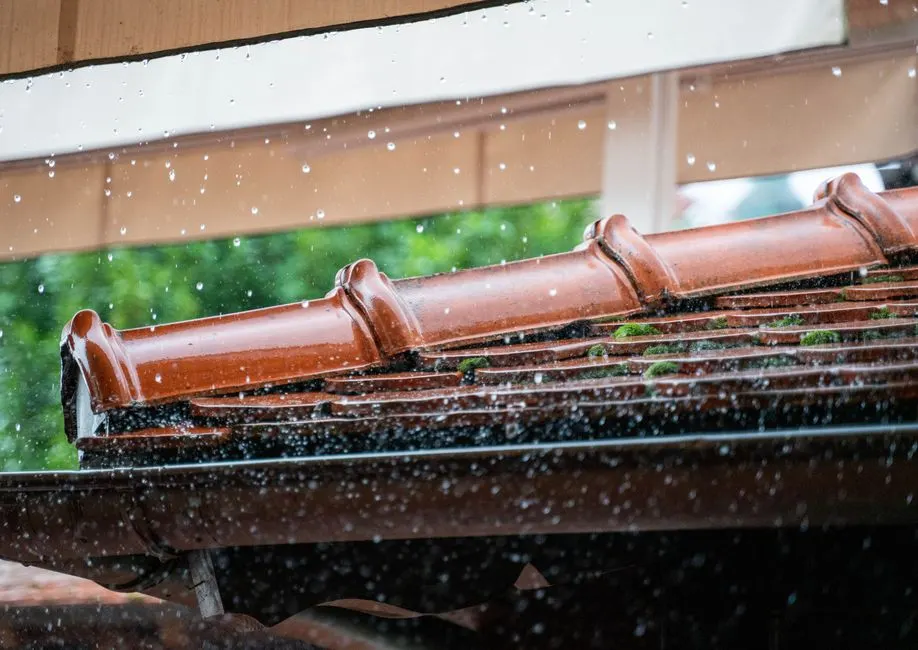
Your roof leaks during heavy Florida rain because storm-driven water is being forced into a failure point that stays hidden during light rain - a lifted shingle, a cracked pipe boot, a clogged valley, or failed sealant around a vent. That failure point has likely existed for months; the storm just delivered enough water, at enough pressure, to push it through. This article covers the seven causes we see most often, how to stop the leak while it's still raining, what the water damage looks like behind your walls, and what cleanup costs in 2026.
Why does my roof leak during heavy Florida rain?
Why does my roof leak water during heavy Florida rain is a question about hydraulics as much as roofing. A typical Florida downpour drops 1 to 3 inches of rain in under an hour, and wind pushes that water sideways at 40 to 60 mph. Water that would normally run down your shingles and into the gutter gets driven up under the laps, into the ridge, and against every penetration on the roof.
Roof leak water extraction in Florida is the category of work that handles what happens next - the water that gets past the roof and into your attic, insulation, drywall, and ceilings. The leak itself is a roofing problem. The water it leaves behind is a restoration problem, and it starts damaging your home within the first hour.
Three things make Florida different from almost anywhere else:
- Rain intensity. A 2-inch-per-hour rain event overwhelms small defects that stay dry in a 15-minute shower.
- Wind direction. Horizontal rain finds the windward side of the roof, which is why leaks often appear on the side facing the storm, not the low side.
- Heat and UV. Florida sun bakes shingles, flashing, and sealant year-round. A bead of roof cement that lasts 20 years in Ohio lasts 5 to 7 here.
If you're already mopping up water inside the house, our team handles emergency water extraction Florida around the clock, and we can be on-site while you're still tracking down a roofer.
The 7 most common causes of roof leaks in Florida storms
Roof leak causes in Florida cluster into seven categories, and almost every storm call we run falls into one of them. Knowing which one you're dealing with tells you whether it's a $300 fix or a $3,000 repair.
1. Lifted or missing shingles
Asphalt shingles are held down by nails and a thermal seal strip. After 10 to 15 years of Florida heat, that seal strip fails. A 50 mph gust lifts the shingle, water slides underneath, and the leak shows up 6 to 10 feet away from the actual damage. This is the single most common cause we see on homes built between 2000 and 2012.
2. Failed pipe boots and vent flashing
Every plumbing vent stack and exhaust fan on your roof passes through a rubber boot. That rubber cracks at 8 to 12 years in Florida sun. When it splits, water runs straight down the pipe and into your attic. A replacement boot costs $150 to $350 installed - one of the cheapest fixes on this list and one of the most frequently missed.
3. Clogged valleys and gutters
Valleys collect water from two roof planes. When pine needles, oak leaves, or granule buildup dam the valley, water backs up under the shingles and into the deck. Full gutters do the same thing at the eaves. If your gutters overflow during a normal rain, they will overflow into your soffit and fascia during a storm.
4. Cracked or aged flashing
Flashing is the metal that seals roof-to-wall intersections, chimneys, and skylights. The sealant behind it dries, cracks, and pulls away. Water finds that gap every time the wind blows from that direction. Re-flashing a chimney runs $400 to $900; ignoring it can mean a rotted roof deck and a $2,500 repair.
5. Damaged or missing ridge caps
Ridge caps cover the peak of the roof. When they crack or blow off, water enters at the highest point of the house and travels down inside the framing. That's why a leak at the ridge often shows up as a ceiling stain in the middle of a room, not at the edge.
6. Roof age and granule loss
An asphalt shingle roof in Florida lasts 15 to 20 years. Past year 15, the granules are gone, the mat is brittle, and every storm finds a new weak point. If your roof is 18 years old and leaking in three places, patching one spot is throwing money at a roof that needs replacement.
7. Storm and hurricane damage
Hurricane-force wind doesn't just lift shingles - it drives rain horizontally into the smallest opening. After a named storm, we routinely find leaks caused by missing ridge vents, torn underlayment, and impact damage from debris. If you're dealing with that kind of water intrusion, our Florida storm water damage extraction team handles the interior side while your roofer handles the exterior.
How to stop a roof leak during heavy rain in Florida
How to stop a roof leak during heavy rain in Florida comes down to one rule: control the water inside the house, don't go on the roof. Climbing onto a wet roof in a storm is how people get hurt. Do this instead:
- Catch the water. Buckets, trash cans, towels. Move furniture and electronics out of the drip zone.
- Kill the power to affected rooms. If water is anywhere near a ceiling light, ceiling fan, or outlet, shut off that breaker at the panel.
- Poke a small drain hole. If the ceiling is bulging with trapped water, use a screwdriver to open a pencil-sized hole at the lowest point of the bulge. That's counterintuitive, but a controlled drip beats a 40-pound sheet of drywall landing on your floor.
- Document everything. Photos and video of the leak, the ceiling, and the wet belongings. Your insurance adjuster will want them.
- Call for extraction. Water sitting in insulation and drywall starts growing mold in 24 to 48 hours. Our Florida 24 hour water removal crews work through storms, and we can start pulling water out while you wait for a roofer to get to you.
Once the rain stops, you can tarp the roof or apply temporary sealant - but only on a dry, safe surface. Permanent repair waits for a roofer and dry conditions.
What roof leak water damage looks like inside your home
Roof leak water damage in Florida almost never stays where the leak is. Water follows framing, insulation, and gravity, which means the damage shows up somewhere other than the entry point.
What we find on a typical roof leak call:
- Attic: wet or matted insulation, dark staining on the roof deck, and a musty smell within 48 hours.
- Ceiling: brown rings, bubbling paint, sagging drywall, and - in bad cases - a ceiling that's holding 20 to 40 pounds of trapped water.
- Walls: paint peeling at the top of the wall, baseboards separating, and soft drywall when you press it.
- Floors: cupped hardwood, lifted tile, and wet carpet padding that will not dry on its own.
We handle all of that under one roof. Roof leak cleanup in Florida means extracting standing water, pulling wet insulation, setting drying equipment, and treating affected surfaces so mold doesn't take hold. If you want the full picture of what that involves, our Florida roof leak water removal page walks through the process step by step.
Common mistakes homeowners make with roof leaks
Common mistakes with roof leaks turn a $500 problem into a $5,000 one. The pattern is almost always the same: the leak gets treated as a roofing issue and the water damage gets ignored.
Watch out for these:
- Waiting for the rain to stop before calling anyone. Mold starts in 24 to 48 hours. By the time the weather clears, the damage is already spreading.
- Patching the shingle but not drying the attic. The roof stops leaking. The wet insulation and decking keep rotting.
- Assuming the leak is directly above the stain. Water travels along framing. The entry point is often 6 to 12 feet from where the ceiling shows damage.
- Skipping the insurance call. Most Florida homeowners policies cover sudden storm-related water damage. Not calling is leaving money on the table.
- Running a household fan and calling it dried. A box fan does not dry a wet wall cavity. You need commercial air movers and dehumidifiers, and you need moisture readings to confirm the structure is dry.
We see this pattern constantly across the state, including in older neighborhoods where Tampa water damage restoration Florida calls spike every June through September. The homes that come out cheapest are the ones where the owner called for extraction the same day the ceiling started dripping.
When to call a professional
Call a professional the moment water is inside the house - not the moment the roof stops leaking. Those are two different problems, and the interior one is the one that costs you money.
Call us if any of these are true:
- Water is actively dripping, running, or pooling inside the home.
- A ceiling is bulging, sagging, or stained across more than a square foot.
- The attic insulation is wet or the roof deck is dark and soft.
- You smell mustiness in a room that wasn't musty last week.
- The leak happened during a named storm and you're filing an insurance claim.
Florida Aero Dry Restoration handles the water side - extraction, structural drying, moisture verification, and documentation for your claim. We work alongside your roofer, not instead of them. You get one team drying the house and one team fixing the roof, and neither one is waiting on the other.
Frequently Asked Questions
Why does my roof leak during heavy Florida rain?
Heavy rain and wind force water into small defects that stay dry in light rain - lifted shingles, cracked pipe boots, failed flashing, or clogged valleys. The defect is usually months old. The storm just delivers enough volume and pressure to push water through it.
How do I stop a roof leak in heavy rain in Florida?
Stay off the roof. Catch the water with buckets, kill power to affected rooms, and poke a small drain hole in any bulging ceiling to release trapped water. Call for water extraction immediately - mold starts in 24 to 48 hours. Permanent roof repair waits for dry conditions.
How much does roof leak water extraction cost in Florida?
Typical 2026 pricing runs $1,200 to $3,500 for a single-room roof leak, including extraction, drying equipment, and moisture verification. Multi-room or attic-involved jobs run $3,500 to $7,500. Insurance usually covers storm-related leaks, so your out-of-pocket is often just the deductible.
Does Florida homeowners insurance cover roof leaks?
Yes, if the leak is sudden and storm-related. Florida policies typically cover water damage from hurricanes, wind-driven rain, and sudden roof failures. They usually do not cover long-term neglect, repeated leaks, or damage from a roof past its service life. Document everything and file promptly.
Can a roof leak cause ceiling water damage in Florida?
Yes, and it often does. Water travels along framing before it drips, so the ceiling stain is frequently 6 to 12 feet from the actual roof defect. Ceiling drywall can hold 20 to 40 pounds of trapped water before it sags or collapses. Call for extraction the same day you notice it.
Get help with Emergency Water Damage Extraction in Florida
A roof leak during a Florida storm is a two-part problem: the roof needs a roofer, and the water inside your home needs to come out now. We handle the second part - extraction, drying, and documentation - so your house dries out before mold gets a foothold.
Call Florida Aero Dry Restoration at +1 (855) 574-2638. We answer 24/7, and we can be on-site while the rain is still falling.